

Phishing protection: a 2026 guide for security leaders
Imagine losing $25 million in a day to cybercriminals. In 2025, that very thing happened to a Fortune 100 company as the result of a single deepfake CEO scam. The attackers cloned the CEO's voice using AI, instructed a finance employee to wire funds to a "confidential acquisition," and executed the plan before raising a single alarm.
This isn't a one-off. AI-generated phishing via email, voice, video, and even chat is only getting better, blurring the line between human and machine deception. Traditional prevention methods aren't keeping up because they weren't created with this level of sophistication in mind.
This guide is built for security leaders ready to evolve their defenses. We'll show you how to build a layered, realistic model for phishing protection that pairs technical tools with human risk insights.
Adaptive Security has helped hundreds of CISOs and IT leaders rethink how they tackle phishing. What follows isn't theory. It's a blueprint built on frontline experience and a deep understanding of human risk.
What is phishing protection today?
The best phishing protection strategy is a multi-layered security framework that integrates technical controls, ongoing employee education, and real-time human risk intelligence. The goal isn't just to block threats, but to detect, respond, and recover faster than your adversaries can adapt.
Email remains a major vector, but modern phishing campaigns now span:
- SMS and messaging apps (smishing)
- Business collaboration tools (e.g., Slack, Teams, Zoom)
- Social platforms (LinkedIn impersonation, fake recruiting)
- AI-driven voice and video impersonation (vishing and deepfakes)
Because phishing attempts exploit the tools your workforce uses daily, anti-phishing protection can't be siloed. A layered defense model combines phishing protection software, behavioral insights, cultural readiness, and incident response.
The real anatomy of a modern phishing attack
Understanding the cybercrime playbook is the first step in neutralizing it. Here's how phishing scams really happen in 2026.
- Email: The Cybersecurity and Infrastructure Security Agency found that within the first 10 minutes of receiving a malicious email, 84% of employees either reply with sensitive information or interact with a spoofed link or attachment.
- SMS (smishing): Direct text messages to personal phones outside email protection have a response rate as high as 45%.
- Collaboration platforms: Attacks often involve fake workspaces or channels that closely resemble legitimate company environments, deceiving users into revealing credentials or sensitive data. Features meant to enable external collaboration can be abused.
- QR code phishing (quishing): Quishing is phishing delivered through malicious QR codes. Attackers lure users into scanning codes that lead to fake websites, malware, or fraudulent payments.
- AI-generated content: These easy-to-craft attacks look like perfectly phrased messages tailored to your org's lingo or adaptive messaging that changes based on the recipient.
- Zero-click exploits: These attacks silently install spying or malicious software on a device by exploiting unpatched vulnerabilities, often through messaging or calling apps, without the victim clicking a link or taking any action at all.
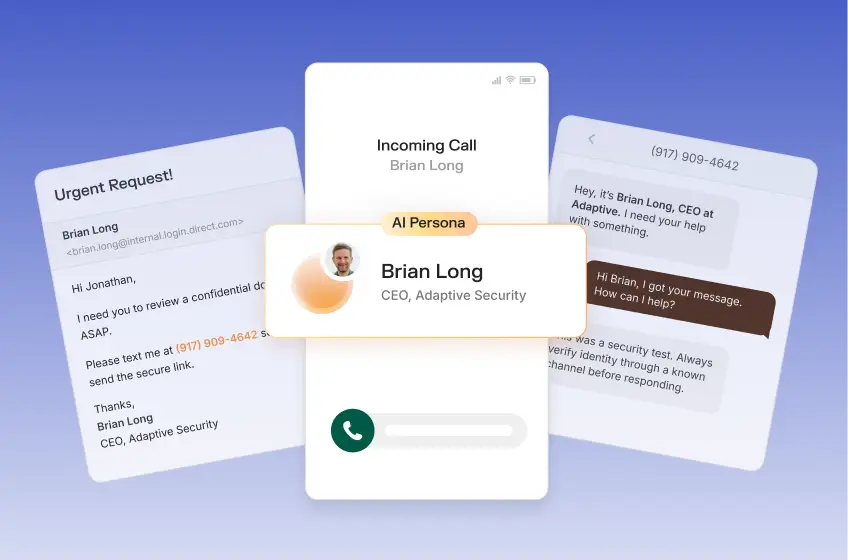
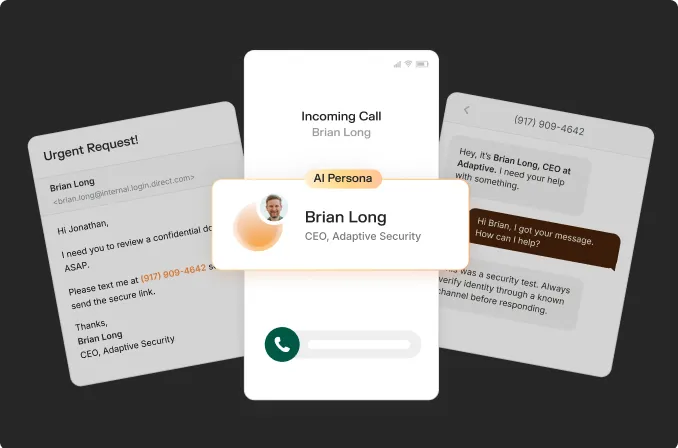
- Deepfake voice and video: Deepfake voice and video use AI to convincingly clone a real person's speech or appearance, allowing attackers to impersonate trusted individuals and manipulate victims into believing fabricated calls, videos, or messages.
Each of these vectors also operates using psychological manipulation themes, including urgency, authority, and rapport. Every phishing attempt leverages a human's cognitive vulnerability. That's why defenses can't be tech-only. You need to anticipate emotional manipulation, too.
Why do most phishing protection strategies still fail?
Despite increased security budgets and awareness, phishing remains the root cause of many high-impact breaches. The problem is that most organizations still rely on outdated models of protection that don't reflect today's threat complexity or how humans actually behave under pressure.
Let's break down the three most common failure points.
1. Tech stack blind spots
Many enterprises lean too heavily on their existing infrastructure, email security, Security Information and Event Management (SIEM), and endpoint protection, assuming these tools will catch everything. But in reality:
- Filters can't spot every AI-generated or context-aware ransomware message.
- SIEMs are reactive by nature. By the time an alert triggers, the damage may be done.
- Threat intel lacks human context. Risk varies by individual behavior and job role, which tech alone can't assess.
This overconfidence in automation leaves dangerous gaps, especially when attackers tailor campaigns to bypass known defenses.
2. Human-layer gaps
Phishing protection is only as strong as your workforce's awareness, and most programs still treat training as a checkbox.
- Annual modules are forgettable and don't reflect real-world cyber attacks.
- Simulations are too generic, failing to mirror the urgency, emotional manipulation, or tools used in actual breaches.
- Employees don't understand the "why" behind behaviors, which reduces engagement and retention.
- Employees don't understand how they're vulnerable to identity theft or how they're exposing themselves via social media.
Without adaptive, role-specific training that evolves with threats, your human layer becomes the weakest link.
3. Misaligned metrics
Security teams often measure success using click rates or simulation participation, but these don't reflect actual risk.
- A low click rate doesn't mean your users understand threats.
- No follow-up on high-risk behavior means missed opportunities to intervene.
- Metrics aren't tied to business outcomes, such as reduced incident response time or decreased exposure to high-value targets.
Effective phishing protection must link human risk signals to operational decision-making. That's where most programs fall short and where modern approaches can deliver major gains.
What does an effective phishing protection strategy look like in 2026?
The organizations best positioned to stop phishing are designing systems that reflect how humans, machines, and attackers interact. They prioritize realism and cross-functional defense layers.
Here's what that looks like in practice.
Human defenses
The strongest cyber threat programs begin with people, not policy.
- Behavior-first training: Security awareness adapts to role, threat exposure, and past behavior. Instead of generic slideshows, users get content that's timely, relevant, and scenario-driven.
- Security culture at scale: High-performing organizations embed secure behavior into workflows, from finance approvals to software onboarding. Security becomes a business enabler, not a blocker.
- Risk scoring: Leading teams now assess human risk by behavior (e.g., repeated simulation clicks, failure to report phishing) and adjust training intensity or technical controls accordingly.
Realistic simulations
Phishing simulations have evolved from monthly fake emails to immersive, high-fidelity training exercises.
- AI-generated content: Messages mimic your industry's tone and actual attacker lures, including social engineering-driven content.
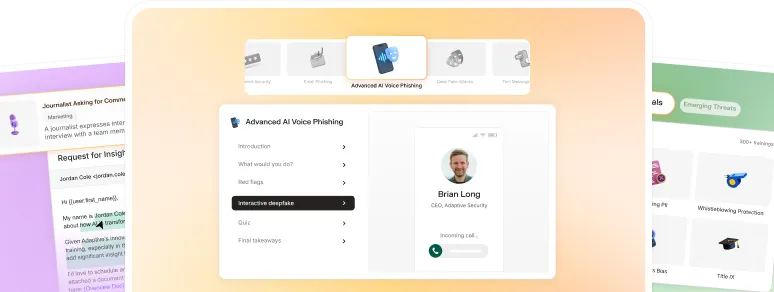
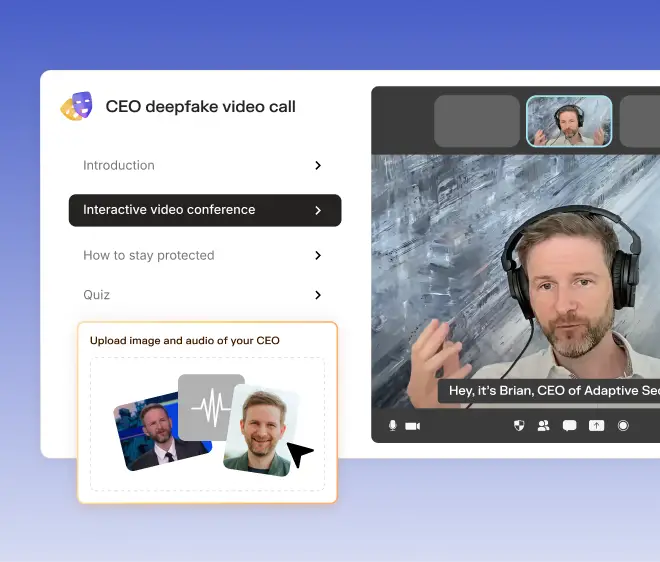
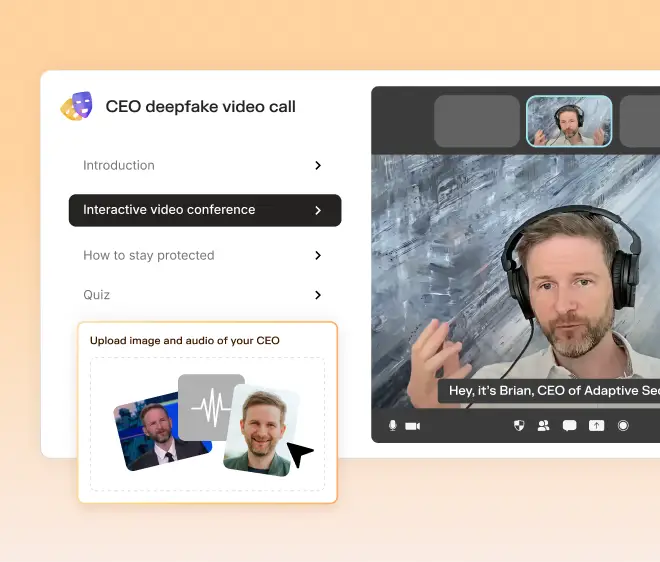
- Voice and video deepfakes: Simulated vishing and CEO fraud phone calls prepare users for what's next.
- SMS and chat platform testing: Exercises are delivered via WhatsApp, Slack, and Teams, where the real threats now live.
When simulations feel real, employees respond better. They stop seeing phishing as "just IT's problem" and start understanding how they're targeted.
Technical defenses
No phishing strategy is complete without hardened tech defenses, but they must work with the human layer, not in isolation. Multi-factor authentication (MFA) is still foundational. But in 2026, adaptive MFA that varies based on behavioral risk is the new standard.
Domain-level email authentication like DMARC, SPF, and DKIM stops spoofing at the source. Endpoint-level anomaly detection is also a must, providing alerts that factor in user behavior, like unusual file access or credential reuse, rather than static rules.
Together, these technologies create a safety net. They don't replace human judgment. They support it.
Measuring the effectiveness of phishing protection
Modern phishing protection isn't just about prevention—it's about continuous improvement. The best programs use data to drive decisions, refine training, and demonstrate impact to stakeholders.
Here's how mature organizations measure success in 2026:
- Time to click: Track how quickly users fall for simulated phishing attacks. A faster click signals a lack of scrutiny and higher risk, especially if it occurs outside of work hours or on mobile devices.
- Retraining effectiveness: Measure post-training behavior changes. Are employees who clicked "malicious links" last quarter avoiding traps now? Is training reducing repeat offenses or improving report rates?
- Repeat offender rate: Identify high-risk users based on past performance. This helps tailor remediation plans (e.g., one-on-one coaching, elevated technical restrictions) and track risk over time.
- Behavior-based risk scoring: Go beyond static roles and apply dynamic scoring based on engagement, susceptibility, and reporting behavior. Prioritize resources around users who pose the greatest organizational risk.
- Reporting rates and time to report: Track how often and how quickly users escalate suspected phishing attempts. High report rates can indicate strong awareness and trust in the security team.
- Board and audit-ready reporting: Translate phishing program performance into business language, building credibility and supporting compliance mandates (e.g., SEC cybersecurity disclosures, ISO/IEC 27001):
- % of workforce with reduced risk scores
- Time-to-detect and time-to-respond trends
- Reduction in real incident costs or investigation hours
Build a modern phishing protection program with Adaptive Security
Phishing attacks in 2026 are faster, smarter, and more psychologically targeted than ever. Protecting your organization from hackers requires more than tech. It demands a human-centered, risk-driven approach.
Adaptive Security helps CISOs, IT leaders, and security teams move beyond checkbox compliance. We combine behavioral insights, immersive simulations, and measurable risk reduction into a platform built for the threats of today and tomorrow.
Ready to evolve your phishing protection strategy? Request a personalized demo to see how Adaptive Security can reduce your human risk footprint.
FAQs about phishing protection
What's anti-phishing protection?
Anti-phishing protection refers to tools and strategies used to detect, disrupt, and neutralize phishing attacks. It includes email filters, MFA, phishing simulations, and employee training to defend against phishing emails, links, and impersonation attempts.
How does phishing protection work?
Phishing protection works by identifying threats before they reach users, training employees to recognize suspicious behavior, and responding quickly to incidents. It involves a mix of technical controls (e.g., DMARC, anomaly detection) and human-layer defenses like simulations and awareness programs.
This allows security teams to identify high-risk users, prioritize remediation, and demonstrate improvement over time using defensible metrics.
What's the best phishing protection strategy in 2026?
The best strategy blends layered defenses—technical tools, adaptive training, and behavioral risk scoring. Simulations from Adaptive Security include AI-generated content and deepfakes, while metrics track time to click, report rates, and repeat offenders.
This keeps employees safe from suspicious emails, malicious links, and advanced threats.
What's the best service for phishing protection?
The best services offer realistic phishing message simulations that change behavior and drive measurable risk reduction. Adaptive Security leads the way with deep human risk analytics, role-based phishing scenarios, and seamless integration into your existing security stack.
What's the best phishing protection solution?
Look for a solution that combines technical safeguards with behavior-driven training. Adaptive Security's platform goes beyond detection to build a resilient, security-aware culture and reduces risk where it starts: with people.

As experts in cybersecurity insights and AI threat analysis, the Adaptive Security Team is sharing its expertise with organizations.
Contents